



Begotten of a TV show it has long since eclipsed in iconography and popularity, the Mission: Impossible film series belongs to the rarest pedigree of pop-IP remakes and adaptations. Not only more successful, longer-running, and, quite frankly, better than its source material, the franchise has also demonstrably influenced and improved the landscape of American action cinema. With the ostensible finale hitting theaters this spring in the form of The Final Reckoning, we accept this mission to celebrate a modern blockbuster staple in the form of a weekly retrospective.
Eight films. Five directors. Nine writers. Over $4 billion at the box office. One Ethan Hunt.
After nearly thirty years, the Mission: Impossible franchise comes to an end with The Final Reckoning. To think that the series has finally arrived at a farewell finale makes me feel that much happier that the series has made it this far at all. There was a time at which each new entry came with the question, “Is this going to be the last one?” or “Is this the one that finally figures out the formula?”
While it seems silly to think these things now about a franchise with eight films, the first decade of the series is filled with uncertain variety: wild narrative choices, diverse approaches to cinematography and editing, a trio of uniquely interesting directors, and an identity crisis that results in three films that execute Mission: Impossible‘s premise in very different ways. It all began in 1996.
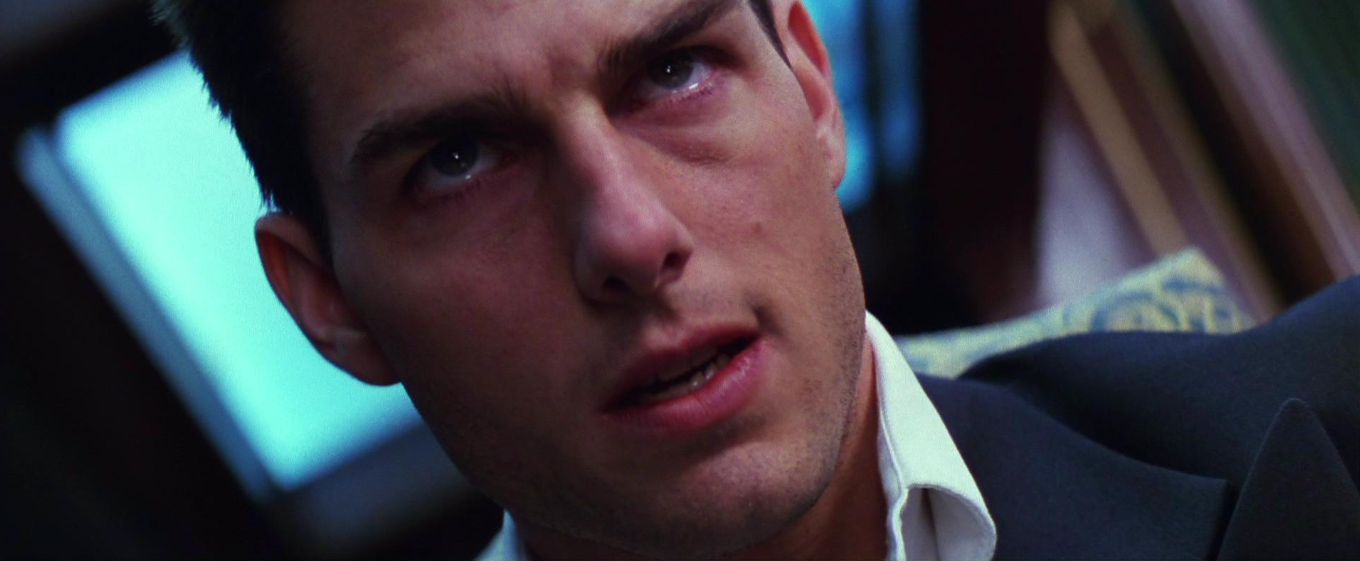
Mission: Impossible ’96 is probably the most interesting film of the original trilogy mainly because of its strangely giallo approach to the spy franchise. It’s a mystery thriller following Tom Cruise’s Impossible Mission Force (IMF) agent Ethan Hunt as he attempts to uncover the identity of the black-gloved killer—a mysterious figure who burned him and his team, framing them for stealing a blacklist that could put deep cover agents in grave danger. It’s a film filled with stark lighting, striking sets, an iconic heist, and enough of dutch angles for the entire series. There’s a tactile, scrappy nature to this film that is understandably lost in future entries.
As much as I love the film’s approach to gadgets and espionage, it very much feels like something that was already dated by the dawn of the 21st century. Even so, I can’t help but love Cruise’s commitment to the rubber mask disguises before they became mostly-CGI fare in later entries.
Ultimately, this franchise wouldn’t fully hit its stride until the 2010s, but I have a soft spot for how unique M:I ’96 ends up being among the other entries. There’s a moodier energy here that is never replicated again. Should the rest of the series have maintained the same approach? I say no, but I do think that a major reason for the franchise’s longevity is the potential showcased by director Brian de Palma in the first film’s aesthetic style, tone, and commitment to its characters (when the writing actually gives the characters something to chew on). After the film made nearly half a billion dollars worldwide, it was up to Cruise and Paramount Pictures to figure out how to follow it up, especially after its popularity wasn’t enough to keep de Palma interested in directing another entry.
What followed was a four-year gap, loudly punctuated in 2000 by the most controversial film in the entire series. Mission: Impossible II trades out de Palma’s signature dramatic style for the bombastic, fiery kineticism of Hong Kong action director John Woo, hot off the heels of his American hit Face/Off, and the dark, foggy whodunit is replaced with a high-octane race to save the world from a super-virus.
M:I-2 is known best by its reputation as the worst film in the franchise. From a hilariously nonsensical plot to a worthless love triangle between Ethan, Thandiwe Newton’s Nyah Hall, and Dougray Scott’s Sean Ambrose, the sequel feels like it’s going out of its way to distract the viewer from its lack of a coherent narrative by being overconfident in its action, sex appeal, and the spectacle of Cruise kicking a bad guy in slow motion. It’s wild to think that, according to Scott himself, M:I-2 is a major reason as to why Hugh Jackman is Wolverine today.
Even wilder: M:I-2 was the highest-grossing film of 2000. Despite its flaws, the sequel improved on the first film’s box office, pushing the franchise’s total gross past a billion dollars in just two entries.
However, an identity issue arose from the second film: who the hell is Ethan Hunt? After two films, Ethan didn’t offer much to latch onto beyond broad charisma, extremely high physical and technical talents, and a couple professional lines he’d never cross. Both films even gave him love interests that fell flat in different ways. If the series was going to continue, it needed to answer this question: what would make Ethan a compelling hero?
The answer came in three parts, discovered (even if not perfected) by the third film:
- A solid team for Ethan to work with.
- A genuinely imposing antagonist who would push him to his moral and psychological limits.
- Agency regarding his personal life.
Six years after the release of M:I-2 came the best film of the series yet: Mission: Impossible III. Jumping from a seasoned action director in his fourth decade of filmmaking to the directorial debut of a promising television talent, M:i-III features Alias and Lost creator J.J. Abrams at the helm. The final film in the trilogy surrounds Ethan with compelling supporting players: a talented team that’s actually fun to watch him bounce off of, an intimidating villain brought to life from his very first scene by Philip Seymour Hoffman—and most significantly, a wife to share a home life with in the form of Michelle Monaghan’s Julia.
M:i-III also presents a far more emotionally charged narrative and a conflict that tests Ethan’s ability to balance his role in the IMF with the security and peace of the life he’s built with Julia. While the film’s mysterious MacGuffin, The Rabbit’s Foot, unfortunately presents a gaping bit of nonsense that the narrative never really bothers to address, the film commits to its spy action in a way that feels more refined and energetic than its predecessors.
It’s a nice surprise to see a first-time director at that time take on a giant budget and an established franchise without losing track of Ethan’s story amidst the bombastic spy thriller backdrop. M:i-III is the film from the original trilogy that comes closest to capturing the magic that’ll be much stronger in later entries. If Ethan’s team members were just a bit stronger as an ensemble, Ethan and Julia’s relationship had more development, and Hoffman had more screen time overall, it could’ve have been among those later greats. As it stands today, Mission: Impossible III still shows that the franchise had a lot more to offer even after the end of a solid trilogy. All the series would need was half a decade to introduce a protocol that would solidify audience perception of the franchise going forward.
Mission Accepted will return each Friday leading up to our review of The Final Reckoning.

Freelance writer out of Indianapolis. Co-host of Odd Trilogies podcast. Whether it's films or television, I'm always down to watch!